Projects

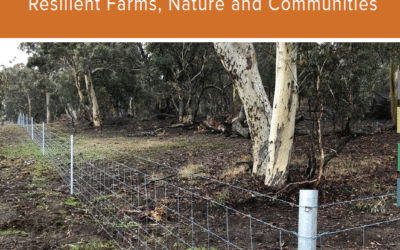
Resilient Farms, Nature & Communities

Resilient Farms, Nature & Communities

Creating resilience for farmers will enable them to reduce impacts of a drying climate, including loss of biodiversity, biosecurity threats, vegetation fragmentation and declining soil health. PHCC’s Resilient Farms, Nature and Communities project will enable farmers to directly address issues through enhancing their skills, capacity and supporting sustainable management of land resources specific to their needs as well as conserving and recovering biodiversity through on-ground activities.

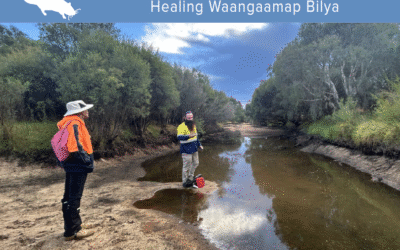
Healing Waangaamap Bilya

Healing Waangaamap Bilya

PHCC will improve a section of the Serpentine River by creating refuge pools and riparian habitat to benefit the Carter’s Freshwater Mussel, Rakali, and improve connectivity with Threatened Ecological Communities including Banksia Woodlands and Clay Pans of the Swan Coastal Plain. These outcomes will be supported with pest management, weed control and expand an innovative water treatment trial to improve ecological health of significant floodplain wetlands.

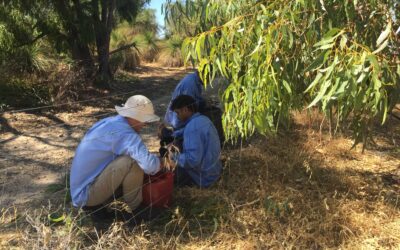
Case Study 47:  Conserving culture and nature, one seed at a time

Case Study 47: Conserving culture and nature, one seed at a time

It takes hundreds of thousands of seeds to revegetate a native Woodland, however, there is currently insufficient seed available on the market to meet the demand for restoration, particularly for Banksia Woodlands species. To address this key limitation, PHCC and the Winjan Bindjareb Boodja Rangers collect and process thousands of seeds each year from threatened Woodlands on the Swan Coastal Plain.

Future Ready Farming

Future Ready Farming

In PHCC’s two largest farming areas, Hotham-Williams and Swan Coastal Plain, this project will focus on supporting farmers to reduce impacts of: • a drying climate • declining soil quality and function • biodiversity loss • declining on-farm waterstorage • biosecurity threats Healthy soil is central to delivering resilience to climate change, natural disasters, helping meet Australia’s emission reduction targets, promoting agriculture growth, food and water security and increasing biodiversity.

Moordidjabiny – Protecting Carnaby’s Black Cockatoos for the future

Moordidjabiny – Protecting Carnaby’s Black Cockatoos for the future

This project will support farmers, private landholders and public land managers in the Peel-Harvey Catchment to manage and improve the habitat values of Carnaby’s Black Cockatoo nesting and feeding sites. PHCC will work with land managers, Birdlife Australia (WA), First Nations Australians and community groups to improve the knowledge of known nesting sites and improve the long-term resilience of these habitats through a range of onground works. Community workshops and training events will be used to raise landholder awareness and encourage land manager participation.

A World for Woodlands

A World for Woodlands

Supporting community to protect Banksia and Tuart Woodland Threatened Ecological Communities. This project will work with community, land managers and First Nations Australians to develop and implement actions to help meet Conservation Advice objectives.

Restoring Ramsar 482 Wetlands and Waterways

Restoring Ramsar 482 Wetlands and Waterways

The project will improve the understanding, wise use and condition of >1000 ha of wetland habitat of the 26,530 ha Peel-Yalgorup 482 Ramsar site and lower reaches of the Bilya Maadjit (Murray River), Waangaamaap Bilya (Serpentine River) & Yoordinggaap Bilya (Harvey River).

Case Study 49:  Banksia Dieback

Case Study 49: Banksia Dieback

Dieback is a plant disease affecting hundreds of thousands of hectares of natural bushland and forest in the south-west of Western Australia. It can have devastating impacts for Banksia Woodland Threatened Ecological Community, due the susceptibility of many native plant species including Banksia’s Hakea’s, Eucalypts and Grass-Trees. The World for Woodland Project has supported phosphite treatments at several remnant Banksia Woodland patches infected with dieback, including the Kingia Thompson Bushland (a privately owned 100-hectare patch of remnant native woodland located approximately 65 km south of Perth in the Shire of Serpentine-Jarrahdale,

Defending Dryandra – Feral Hotspots Project

Defending Dryandra – Feral Hotspots Project

Feral cats have played a significant role in 27 of the 47 extinctions of Australian fauna. They are recognised as a potential threat to 74 mammals including numbats and woylies both of which can be found in Dryandra Woodland National Park (NP). Dryandra Woodland NP is 28,000ha and made up of 17 discrete blocks surrounded by farmland. For this reason landholders surrounding the Woodland play a significant role in protecting threatened fauna by conducting feral animal control to complement on-reserve control activities.

Hotham-Williams Rivers and Tributaries’ Natural Resource Management and Conservation Project

Hotham-Williams Rivers and Tributaries’ Natural Resource Management and Conservation Project

This project represents a renewed a long-term partnership between PHCC and Newmont and will enable the environmental efforts of the last five years to continue. Highlights of the partnership include the employment of a River Restoration Co-ordinator (Kristy Gregory), eight rehabilitation and restoration sites along the Hotham and Williams Rivers, engagement with the Wilman (Dryandra) People Corporation and a range of other community projects.

Case Study 51:  Walking with Winjan and Healing Bilya

Case Study 51: Walking with Winjan and Healing Bilya

The Winjan Aboriginal Corporation and Peel-Harvey Catchment Council Inc. (PHCC) have been walking together for many years to care for Bindjareb Boodja and to develop and grow Winjan’s Bindjareb Boodja Rangers program. Providing training and employment opportunities for Bindjareb people to steward and protect their country is a key strategic direction of the Winjan Aboriginal Corporation. The Rangers program was developed to empower Bindjareb people to continue cultural responsibility to look after country, share cultural knowledge and provide training, up-skilling and employment opportunities. Through the “Healing Bilya-Restoring the Murray and Serpentine Rivers” project, PHCC has supported Noongar cultural knowledge sharing and the Rangers to participate in a range of on-ground restoration activities within the corridors of the Bilya Maadjit (Murray River) and Waangaamaap Bilya (Serpentine River). Training in weed control, revegetation, vegetation and fauna monitoring, maintenance and seed collection has been provided.

Case Study 50:  Healing Bilya Restoring the Murray and Serpentine Rivers

Case Study 50: Healing Bilya Restoring the Murray and Serpentine Rivers

The “Healing Bilya-Restoring the Murray and Serpentine Rivers” project is a continuation of the Alcoa Foundation’s investment for the overarching “Three Rivers, One Estuary Initiative” and the Peel-Harvey Catchment led project “Connecting Corridors and Communities-Restoring the Serpentine River”. The project area was expanded to include the Bilya Maadjit (Murray River) and was developed to improve the ecological health of the Murray and Serpentine Rivers and surrounds. Through collaboration with private landholders, Bindjareb Noongar traditional owners and the broader community, on-ground works identified through River Action Plans have been implemented to improve the ecological health and condition of the river corridors. Knowledge and capacity within the local community has also increased through a variety of engagement and training events and activities.

Healing Bilya-Restoring the Murray and Serpentine Rivers

Healing Bilya-Restoring the Murray and Serpentine Rivers

The “Healing Bilya-Restoring the Murray and Serpentine Rivers” project aims to improve the ecological health of the Murray and Serpentine Rivers and surrounds, through collaboration with private landholders, Bindjareb Noongar traditional owners and the broader community, and increase knowledge and capacity building within the community.

Hotham-Williams Warlang Boodja Project

Hotham-Williams Warlang Boodja Project

Warlang Boodja means ‘Healthy Country’ in the local Noongar language. Restoration of our rivers is intricately linked to their Noongar history because the cultural significance of natural assets in the Hotham-Williams Catchment is strongly linked to our rivers and creeks.

Case Study 42:  Worms in Windrows

Case Study 42: Worms in Windrows

Runnymede farm, situated in the Uduc region near Harvey, is owned and operated by Blythe and her partner Gregg. They have a total of 500 acres of land and currently run 400 chickens, producing pastured eggs, and 400 head of grass-fed beef. Their farm is an ex-dairy property, with soils ranging from straight clay to heavy sand that have had high inputs of NPK in the past. Blythe and Gregg wanted to focus on the health of the whole farming system and regenerative farming guru, Nicole Masters, inspired them to look at practices that will reduce fertiliser inputs, improve soil health, and also improve plant diversity.

Rivers 2 Ramsar  Connecting River Corridors for Landscape Resilience

Rivers 2 Ramsar Connecting River Corridors for Landscape Resilience

The Australian Government has committed ~$3.6 million dollars to protect and enhance biodiversity in the Peel-Harvey Catchment. The ‘Rivers 2 Ramsar’ project will be delivered by the Peel-Harvey Catchment Council and its partners from July 2013 to June 2017. Landscape scale restoration, community engagement and planning will be undertaken in six priority sites across the 11,940km2 catchment.

Protecting WA Black Cockatoos

Protecting WA Black Cockatoos

This project will support private landholders in the Peel-Harvey Catchment to manage and improve the habitat values of black cockatoo nesting and feeding sites, including the Eucalypt Woodlands of the Western Australian Wheatbelt and Banksia Woodlands of the Swan Coastal Plain Threatened Ecological Communities. The Peel-Harvey Catchment Council (PHCC) will work with landholders, Birdlife Australia (WA), other NRM regions and community groups to improve the knowledge of known nesting sites, and improve the long-term resilience of these habitats through a range of on-ground works. Community workshops and training events will be used to raise landholder awareness and encourage farmer participation. The results from surveys and monitoring will feed into Birdlife Australia databases to improve overall knowledge of black cockatoo habitats and populations.

Connecting Corridors and Communities – Developing a River Action Plan:  Case Study 38

Connecting Corridors and Communities – Developing a River Action Plan: Case Study 38

The Serpentine River is a catchment of diverse landuses including urban development, horticulture, grazing, poultry farms, feedlots and hobby farms. Waters from the largely unmodified forested catchment of the upper Serpentine have been and dammed diverted for potable water supplies. The upper and middle reaches of the River have been highly modified to remediate the risk of flooding.

Greening the Farm after a Fire

Greening the Farm after a Fire

Wildfires can have a devastating impact on farms, farming communities and natural resources. The Waroona-Yarloop Fire of 2016 was no exception and burnt 33,000 ha of farmlands in the Peel-Harvey Catchment, causing many landholders to rethink current farming and vegetation management practices.

Connecting Corridors and Communities:  Restoring the Serpentine River

Connecting Corridors and Communities: Restoring the Serpentine River

Through a collaborative approach to improve the health, biodiversity, ecosystem function and ecosystem services of the Serpentine River and the estuary, the Peel-Harvey Catchment Council (PHCC) will work with local community, focusing on private landholders and the Noongar community, to improve the health of bushland and riparian zones as well as connectivity and function of these zones to improve water quality, habitat, breeding and food resources for native species.

Lake Clifton Catchment Conservation Stewardship Project

Lake Clifton Catchment Conservation Stewardship Project

Lake Clifton is a critical part of the Peel-Yalgorup Ramsar Site, being one of the few places on earth where thrombolites, or living rock-like structures, are found. The Lake’s Catchment includes parts of the Yalgorup National Park and over 300 rural residential properties. Land use and vegetation management in the Catchment has a great bearing on the health of the lake and the thrombolites. Major threats to the lake and thrombolites are increasing nutrient levels, increasing salinity, decreasing freshwater inflows from groundwater, and weed infestations.

A world for woodlands

A world for woodlands

Reducing threats to Banksia Woodland Threatened Ecological Communities through land stewardship. This 5 year project will work with community and land managers to develop guiding actions to help meet Conservation Advice objectives.

Wetlands and People

Wetlands and People

Wetlands and People, a community restoring the Ecological Character of the Peel-Yalgorup System’s wetlands, will improve over 1,000 ha of Ramsar habitat. On-ground priority actions will address key threats, and associated direct and indirect stresses placed on the Wetlands, including the Threatened Ecological Community (TEC) of thrombolites at Lake Clifton and priority waterbird habitats.

Numbat Neighbourhood

Numbat Neighbourhood

Supporting people to protect the vulnerable Noombat wioo (Numbat, Myrmecobius fasciatus) in the wild. Noombat wioo (Numbat: Myrmecobius fasciatus) is a small unique marsupial found only in Australia. It is culturally significant to Noongar people and the emblem of WA.

WA Feral Cat Symposium 2018

WA Feral Cat Symposium 2018

Hear from some of the nation’s leading researchers, conservation groups, and government on the innovative future of feral cat control and local successes in tackling a major cause of decline for many of Australia’s endangered species.

Managing bushland on school sites

Managing bushland on school sites

Bushland on school sites can provide a special learning environment for students, and at the same time, a management challenge for school communities. In North Dandalup, 80 km from Perth, the local primary school has one such bushland area: a 1.78 hectare nationally significance site containing rare ecosystems. Management of the bushland has been led by the school community and the local landcare centre for over 10 years,

Guiding horticultural investors and growers in the Peel-Harvey

Guiding horticultural investors and growers in the Peel-Harvey

Through its work on the Peel Sustainable Agriculture Technical Working Group, PHCC has assisted in the development of a suite of information tools for those planning to establish or expand horticultural operations in the Peel-Harvey Coastal Catchment. The Peel-Harvey Coastal Catchment grows more than $350 million of agricultural produce across 142,790 hectares, with production expected to increase significantly over the next two decades.

Making agriculture sustainable in a sensitive coastal catchment

Making agriculture sustainable in a sensitive coastal catchment

Nutrient management is key to ensuring agriculture is sustainable in the Peel-Harvey Coastal Catchment’s poor soils. Since 2014, the PHCC and Shire of Murray have led an initiative to support compliance with state government policy on protection of the Peel-Harvey Estuary and nutrient management standards. The PHCC/Shire initiative has enabled the Peel Sustainable Agriculture Technical Working Group (TWG) to develop new information resources and policy guidance for local governments and proponents of horticultural developments.

Lake McLarty Nature Reserve Action Plan 2017 – 2027

Lake McLarty Nature Reserve Action Plan 2017 – 2027

Lake McLarty is an internationally important wetland located in south-west Australia and an integral part of the Peel‑Yalgorup wetland system, Ramsar 482. Over recent years the lake’s condition has deteriorated due to reduced rainfall, lowered water levels and changes in vegetation and soils. Various groups assist the state government to manage the Lake, including the Friends of Lake McLarty. To maximise the effort of all groups working at the Lake, a joint Action Plan was developed to focus expertise and energy and save this beautiful wetland for future generations.

Helping local communities recover after fire

Helping local communities recover after fire

The Waroona NRM and Fire Recovery Support Project is a two-year initiative to assist and support those within the Shires of Waroona and Harvey impacted by the massive wildfire of 2016. The fire had a significant impact on a number of local communities and burnt over 72,000 ha of native forest, bushland and farmland, including 426 farms covering 33,000 ha. The Project has been designed and delivered by the PHCC to support the community to restore farmlands and natural areas damaged

Farmers for Fauna

Farmers for Fauna

Feral cats endanger at least 142 native Australian species, more than one third of our threatened mammals, reptiles, frogs and birds. Foxes have had a similarly devastating impact nationwide. In the Farmers for Fauna Project, the PHCC assists the 49 farmers around one of south west Australia’s most important public conservation areas, Dryandra Woodlands, to increase the effectiveness of their efforts to control feral cats and foxes and protect the threatened Numbat and

ARC Linkage Project

ARC Linkage Project

This project is a collaborative scientific venture involving more than twenty researchers and land managers from four universities, two State Government departments, two local governments and PHCC. It investigates the links between catchment management and downstream effects and uses this information to model and predict changes in estuary health in response to changes in catchment land uses and estuary management.

Wetland Yarns

Wetland Yarns

In the Wetland Yarns Project the PHCC brings together Noongar People, scientists and artists to share their knowledge and stories about wetlands with school students. The Project was developed and trialled in 2017 by the PHCC and included excursions and school-based activities for over fifty (50) Year Three students from local school, Greenfields Primary. Students visited Lakes Clifton and Mealup and listened to different stories and perspectives from local Noongar Elders and specialist staff from the

Parkfield Lake Nutrient Management Basin

Parkfield Lake Nutrient Management Basin

The Parkfield Lake remodeled an unsightly, degraded artificial lake that suffered from flooding and algal blooms into an attractive nutrient stripping wetland with surrounding parklands removing an estimated 75kg of phosphorus per year. Working with the City of Kwinana, the Peel-Harvey Catchment Council ensured the project reduced nutrient pollution to local waterways while also reducing local flooding risk, creating new recreational areas and habitat for wildlife. The site had historically been used for marketing gardening and was transitioning to residential use.

Slowing the flow: helping our farmers, waterways and wetlands

Slowing the flow: helping our farmers, waterways and wetlands

In winter, a large network of drains help farmers in the Mayfield Catchment battle waterlogged conditions. But in spring, as the land dries out, those drains funnel away much-needed water as well as valuable nutrients. This nutrient-rich water flows into downstream environments, polluting rivers, wetlands and ultimately the Peel-Harvey Estuary.

Restoration of WA’s mighty Murray River

Restoration of WA’s mighty Murray River

Most river reaches in the Peel-Harvey Catchment are in a poor condition after more than a century of uncontrolled stock access, riverbank erosion and weed invasion. With this in mind as part of its Rivers to Ramsar Project, the PHCC embarked on a new initiative to address the management needs of a large section of the longest river in the catchment, the Murray. Commencing with a major review of the decade-old Murray River Action Plan, PHCC staff built an understanding of the ecological condition of the lower and middle

Reinvigorating Landcare in the Hotham-Williams

Reinvigorating Landcare in the Hotham-Williams

In 2013 representatives of the Hotham-Williams community approached the Peel-Harvey Catchment Council seeking assistance to reinvigorate landcare in their catchment. Public investment in landcare in the catchment had been limited since 2008 after many years of strong support and on-ground projects.

Accredited training supports Working On Country

Accredited training supports Working On Country

The PHCC, in partnership with the local Noongar community and Chemsafe, has established and delivered a nationally accredited training course on weed control and safe chemical handling practices. The course, including the new Herbicide Chemical Safety Training Manual, places an emphasis on practical and theoretical knowledge and job-readiness.

Connecting local communities with Cockatoos

Connecting local communities with Cockatoos

A four-year partnership project between Birdlife WA and the PHCC has increased community awareness of south-west Australia’s three iconic, endemic species of Black Cockatoo and the necessity for landscape scale restoration. Under the partnership, 20 Cockatoo Workshops were organised by the PHCC and 400 people participated in the Great Cocky Count across the Catchment.

Building Community Capacity for Sustainable Ag Practices – Healthy Waterways

Building Community Capacity for Sustainable Ag Practices – Healthy Waterways

Mayfield catchment landholders have a long history of Landcare and provided critical information for the Subcatchment Implementation Plan (SIP) for Water Quality Improvement. This Healthy Waterways project, conducted in the Mayfield catchment, helped ‘close the loop’ in regard to the landholders’ contribution to the SIP. Workshops, field days and site visits exposed landholders to land management practices aimed at increasing farm productivity whilst reducing nutrient export into waterways. The project’s evaluation identified that landholders’ priority is clearly farm productivity. There’s strong support for Whole Farm Nutrient Mapping especially as the program offers a comprehensive service and provides independent advice that is easy to understand and implement. The ongoing challenge is to work with landholders on research and actions that drive productivity with the side effect of improved catchment water quality

Lake Mealup Recovery Project

Lake Mealup Recovery Project

Lying to the east of the Harvey estuary, Lake Mealup, straddles public and private lands. Collaboratively managed for its conservation values, and culturally significant to Noongars, it forms an integral part of the Peel-Yalgorup Ramsar wetlands as an internationally important freshwater habitat for migratory waterbirds. Declining water quality (pH2.6) and loss of the open water body was restored by the return of natural water regimes through installation of an adjustable height water diversion weir, control of the invasive Typha orientalis and revegetation of riparian and terrestrial zones.

Alcoa Pinjarra Wetland Project

Alcoa Pinjarra Wetland Project

Initiated by Greening Australia WA and facilitated by PHCC’s Rivercare Program, this water quality improvement project implemented water sensitive urban design principles, to retrofit the 3 drains that received 50% of the town of Pinjarra’s stormwater and restore the wetland through which they flow. Restoration activities improved habitat for aquatic and terrestrial fauna, while reducing nutrient and sediment export to the Murray River just 500m downstream. The rehabilitated wetland, now officially named “Moorni Kep Park” also improves the water quality of the receiving waterbody, the Ramsar-listed Peel-Harvey Estuary in Western Australia.

McLarty’s River Restoration Project

McLarty’s River Restoration Project

Bordering the Murray River and Marrinup Brook, within the catchment of the Ramsar-listed Peel-Harvey Estuary, Gordon McLarty’s property in Meelon, south east of Pinjarra, Western Australia, was the site of extensive waterway, riparian and terrestrial restoration delivered by PHCC. In an area of regionally significant vegetation, the project demonstrated the effectiveness of strong leadership and collaboration between stakeholders to achieve on-ground success. Funding contributions provided a significant amount of resources to complete a large scale project addressing priority targets.

We acknowledge the Noongar people as Traditional Custodians of this land and pay our respects to all Elders past and present